Quantum research cryogenic hardware

RESEARCH

Built from
the physics up.

Research is central to Pelagic. Working directly with quantum hardware reveals the questions and practical bottlenecks that shape what we build. Staying close to the experiment helps us understand where existing tools fall short and where a new method could open up a different measurement.

We remain experimental physicists as we develop the software, testing new methods through our own experiments and collaborations with other researchers. Those collaborations bring different questions, devices, and approaches into the work. What we learn in the lab feeds back into one integrated software stack, so methods developed for one experiment can become a foundation for the next.

SELECTED RESEARCH

Research built
with Pelagic.

Selected publications from collaborative research using Pelagic, with contributions from our founders and the wider experimental teams behind each project.

01
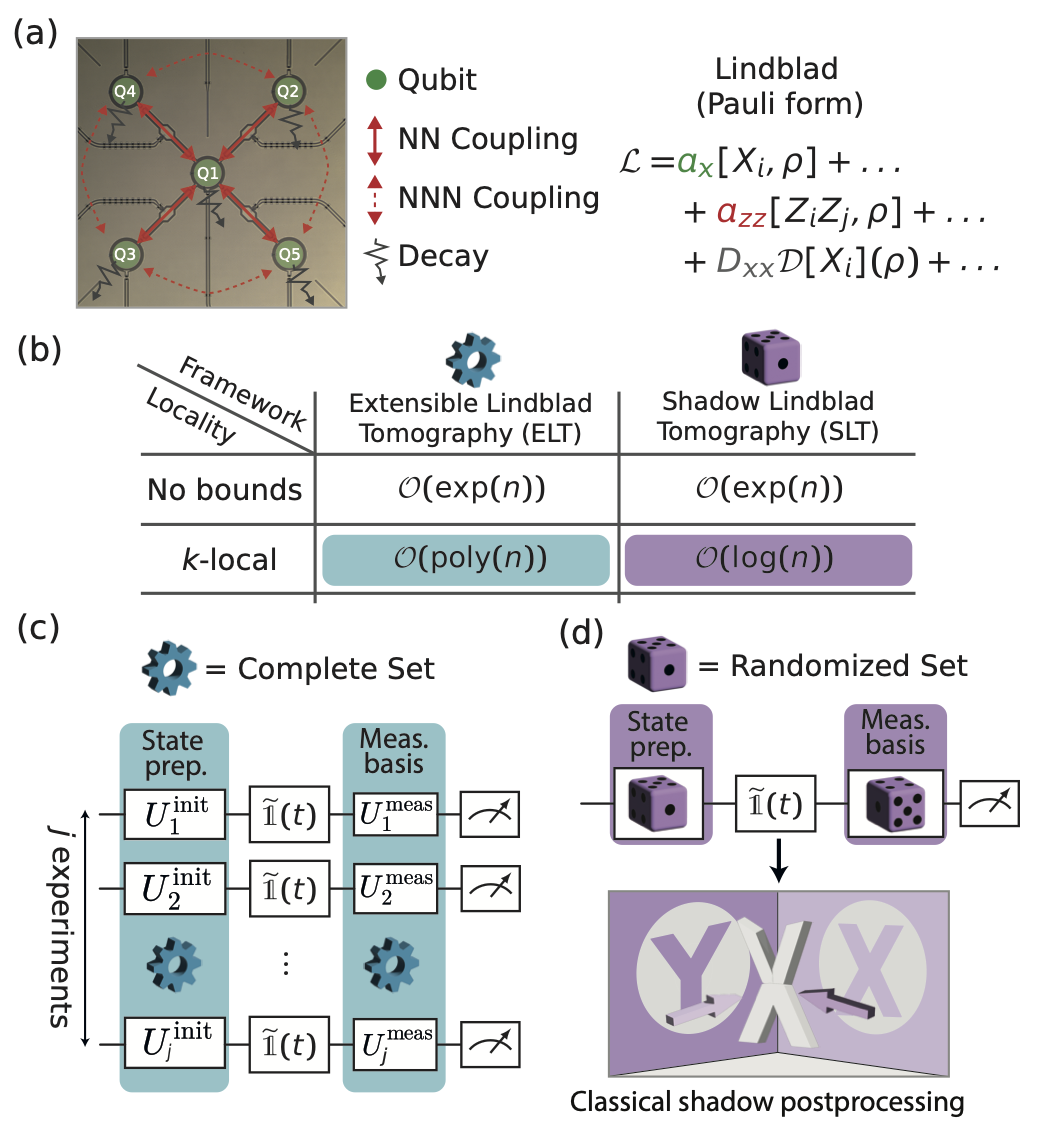
Five-qubit device and comparison of complete and randomized Lindblad tomography, including their measurement sequences and scaling under locality assumptions
CHARACTERIZATION2026

Demonstrating and Benchmarking Classical Shadows for Lindblad Tomography

Rune Thinggaard Birke, Johann Bock Severin, Malthe A. Marciniak, Emil Hogedal, Andreas Nylander, Irshad Ahmad, Amr Osman, Janka Biznárová, Marcus Rommel, Anita Fadavi Roudsari, Jonas Bylander, Giovanna Tancredi, Daniel Stilck França, Albert Werner, Christopher W. Warren, Jacob Hastrup, Svend Krøjer, Morten Kjaergaard

An experimental demonstration that randomized classical-shadow measurements can reduce the resources needed for Lindblad tomography of superconducting processors.
02
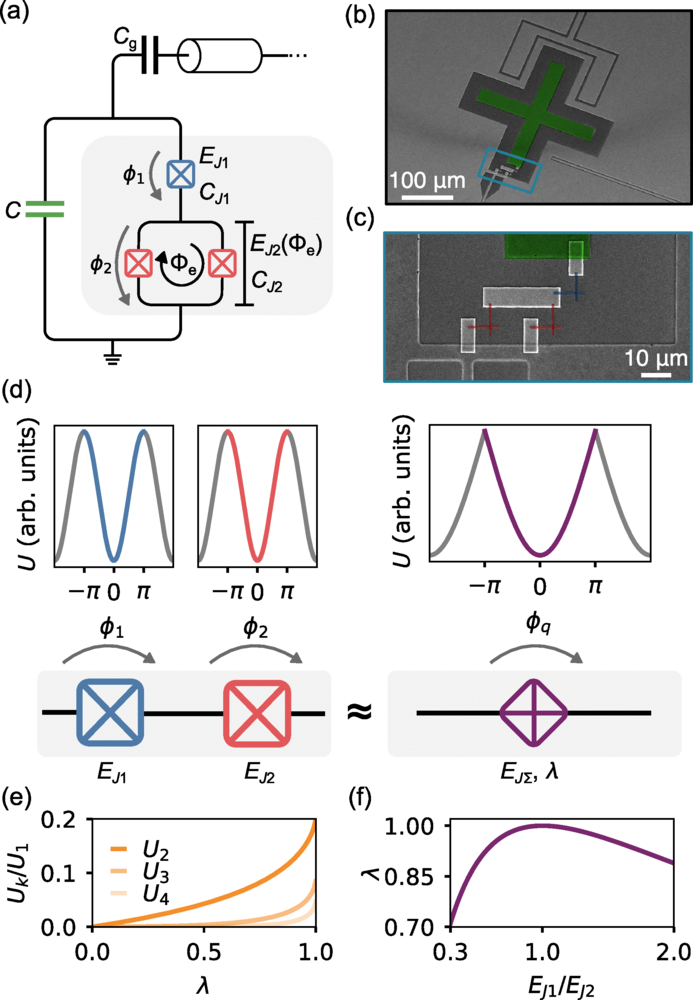
Double-junction transmon circuit, device micrographs, and effective Josephson potential with higher harmonics
QUANTUM CIRCUITS2026

Higher Josephson Harmonics in a Tunable Double-Junction Transmon Qubit

Ksenia Shagalov, David Feldstein-Bofill, Leo Uhre Jakobsen, Zhenhai Sun, Casper Wied, Amalie T. J. Paulsen, Johann Bock Severin, Malthe A. Marciniak, Clinton A. Potts, Anders Kringhøj, Jacob Hastrup, Karsten Flensberg, Svend Krøjer, Morten Kjaergaard

A flux-tunable superconducting circuit reveals higher Josephson harmonics, opening a route to tailored nonlinear quantum devices.

03
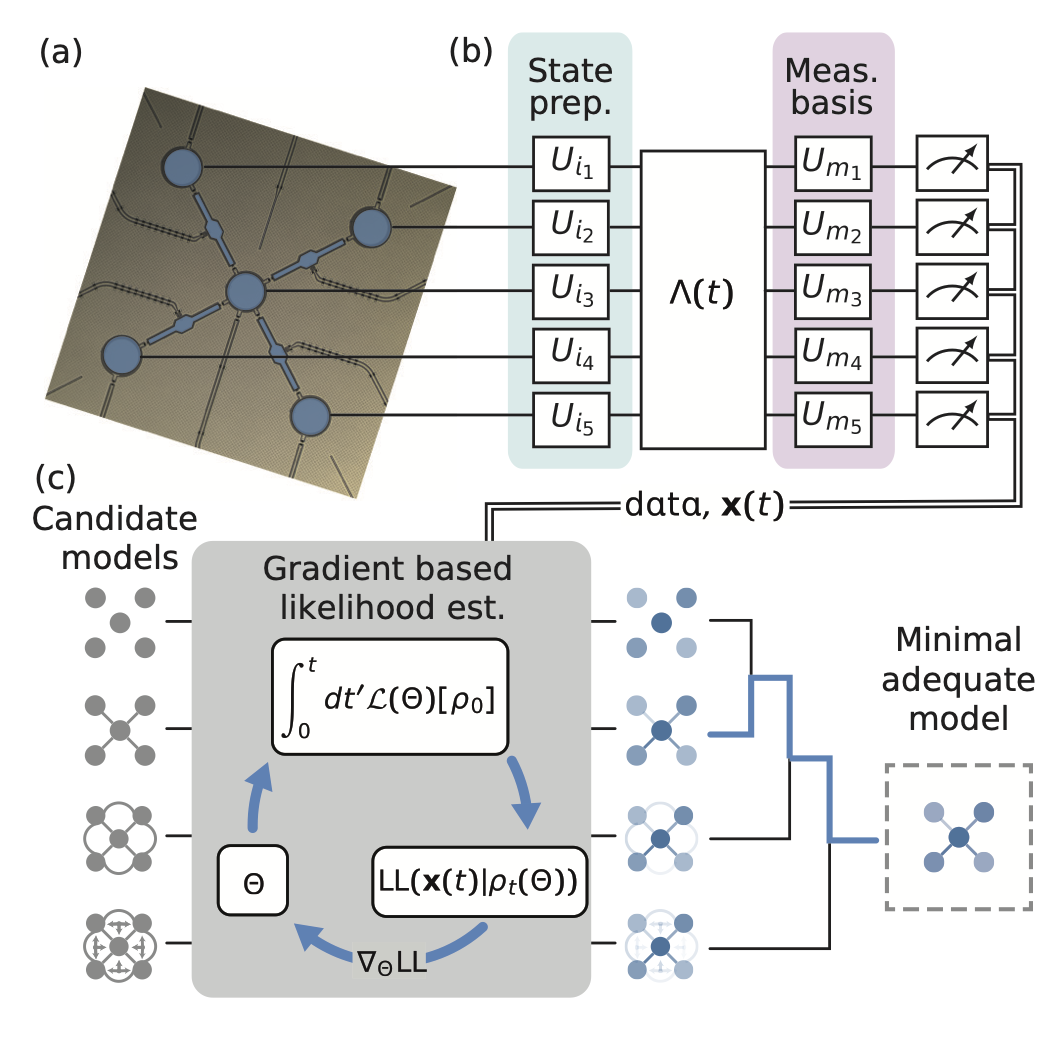
LIMINAL workflow connecting a five-qubit device and tomographic measurements to fitted candidate models and selection of a minimal adequate model
DIGITAL TWIN2026

Learning Lindblad Dynamics of a Superconducting Quantum Processor

Johann Bock Severin, Malthe A. Marciniak, Rune Thinggaard Birke, Emil Hogedal, Andreas Nylander, Irshad Ahmad, Amr Osman, Janka Biznárová, Marcus Rommel, Anita Fadavi Roudsari, Jonas Bylander, Giovanna Tancredi, Christopher W. Warren, Svend Krøjer, Jacob Hastrup, Morten Kjaergaard

LIMINAL is a data-driven framework for testing physical modeling assumptions and selecting minimal adequate Lindblad models directly from time-resolved tomographic data.

04
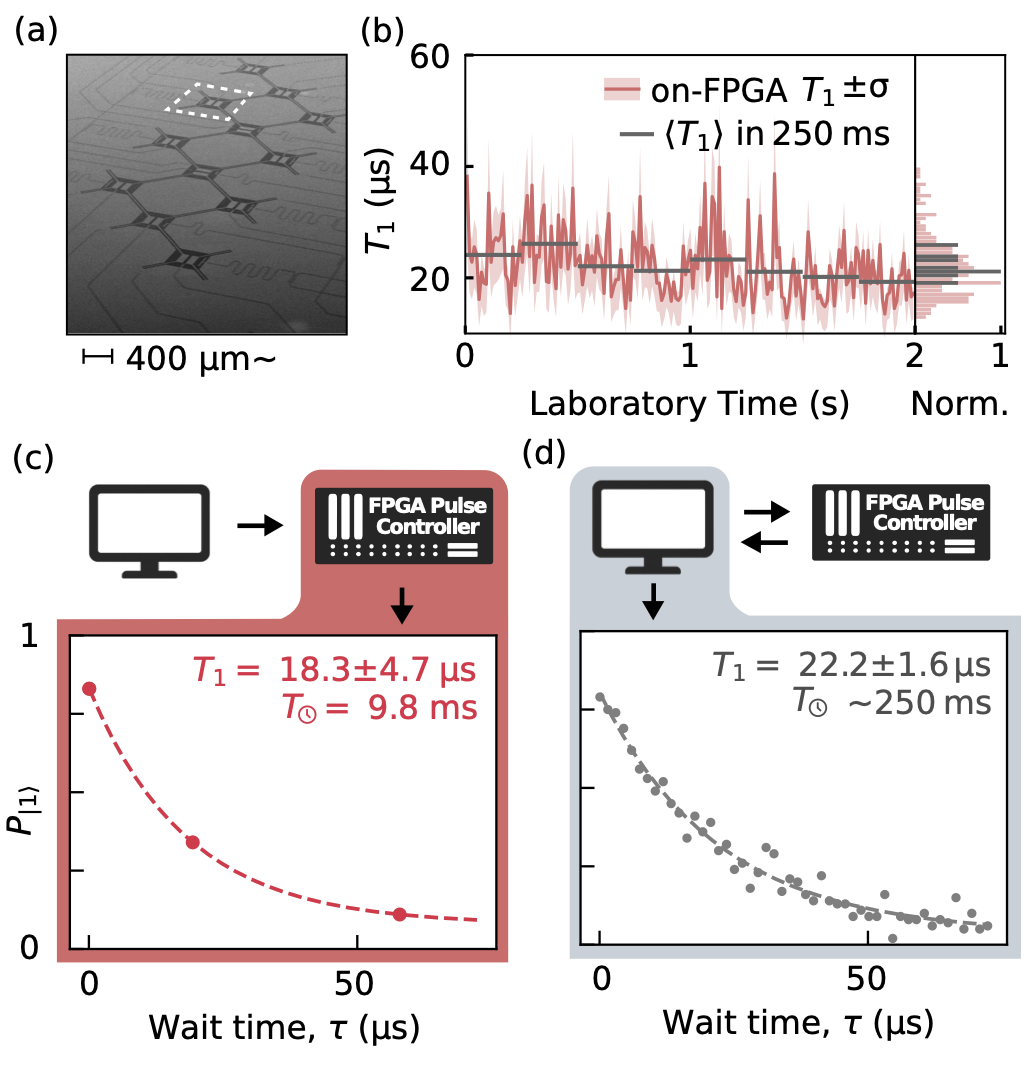
Twelve-qubit device, continuous T1 tracking, and comparison of a 9.8 ms on-FPGA estimate with a roughly 250 ms CPU-offloaded measurement
REAL-TIME CALIBRATION2026

Millisecond-Scale Calibration and Benchmarking of Superconducting Qubits

Malthe A. Marciniak, Rune T. Birke, Johann B. Severin, Fabrizio Berritta, Daniel Kjær, Filip Nilsson, Smitha N. Themadath, Sangeeth Kallatt, James L. Webb, Kristoffer Bentsen, Tonny Madsen, Zhenhai Sun, Svend Krøjer, Christopher W. Warren, Jacob Hastrup, Morten Kjaergaard

An on-FPGA workflow that brings pulse generation, acquisition, inference, optimization, and feed-forward together to calibrate and benchmark superconducting qubits on millisecond timescales.

05
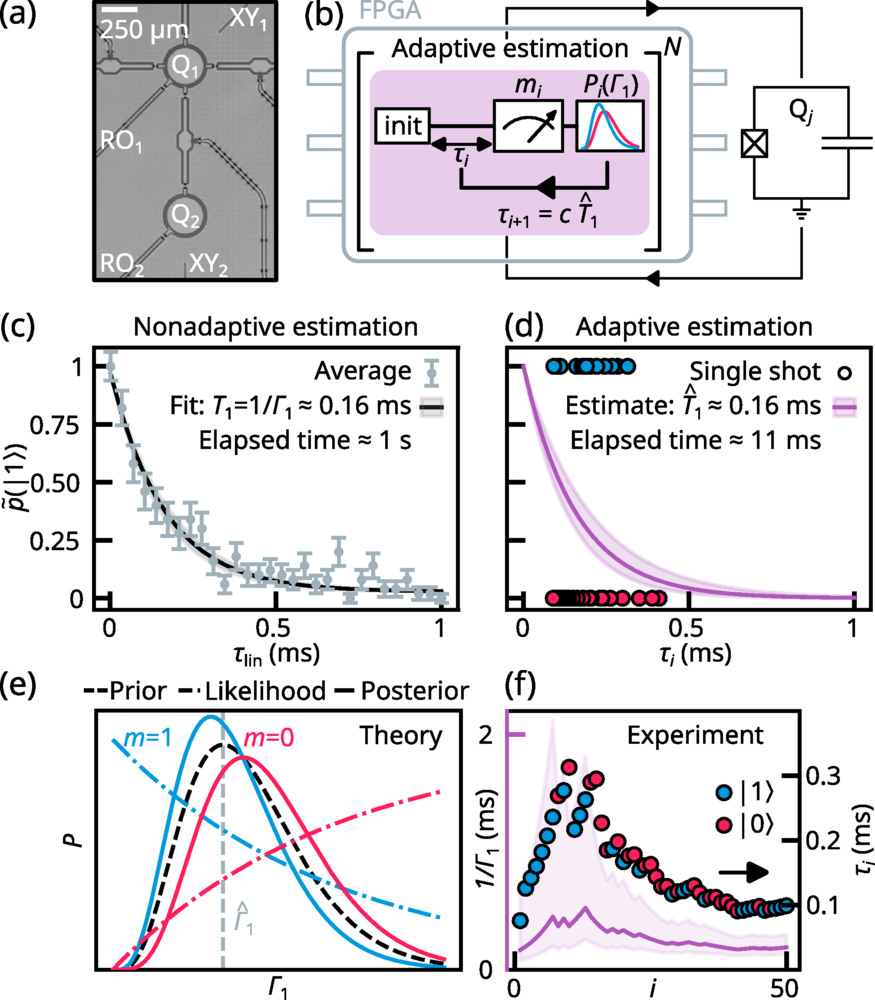
Two-qubit device and FPGA adaptive-estimation loop, comparing nonadaptive decay fitting with Bayesian relaxation-time estimation
REAL-TIME TRACKING2026

Real-Time Adaptive Tracking of Fluctuating Relaxation Rates in Superconducting Qubits

Fabrizio Berritta, Jacob Benestad, Jan A. Krzywda, Oswin Krause, Malthe A. Marciniak, Svend Krøjer, Christopher W. Warren, Emil Hogedal, Andreas Nylander, Irshad Ahmad, Amr Osman, Janka Biznárová, Marcus Rommel, Anita Fadavi Roudsari, Jonas Bylander, Giovanna Tancredi, Jeroen Danon, Jacob Hastrup, Ferdinand Kuemmeth, Morten Kjaergaard

Adaptive Bayesian estimation on an FPGA tracks rapid relaxation-time fluctuations in superconducting qubits with millisecond resolution.